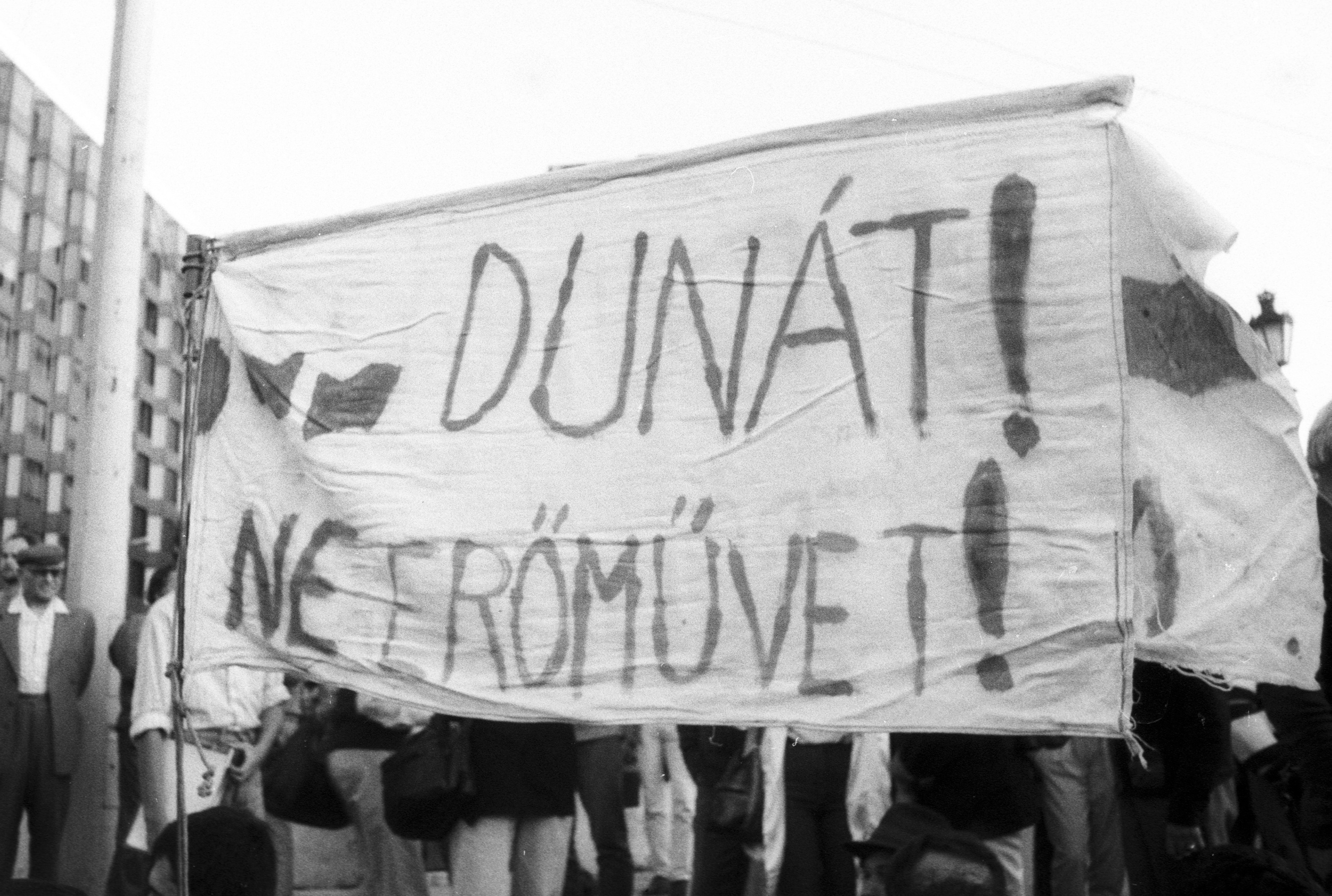
While the failure of centrally-planned economies and centrally-directed societies is now widely accepted, it is much less known that the societies based on a market economy have been equally unable to tackle the environmental crisis.
Vargha and Fleischer, 1993, The most important tasks of environmental protection in Hungary (Eastern European Environmental Research Institute), p. 159.
Latest
Larson, 2023, Computer Center Sabotage, 1968–1971: Luddism, Black Studies, and the Diversion of Technological Progress, in: boundary 2
Scott, 2022, Inside Greenpeace’s science labs, in: C&EN
Freihardt, 2021, Draußen ist es anders: Auf neuen Wegen zu einer Wissenschaft für den Wandel
2010-2020
János Vargha, 2019, Drifting Countries: Politics and Environment in East Central Europe, in: Environmental Cooperation in Europe: the Political Dimension
Aurora’s Eye Films, 2015, Solar Village in Action and The Findhorn Community and Foundation in Scotland
Boudia and Jas, 2014, Powerless Science?: Science and Politics in a Toxic World
Andreas and Wagner, 2012, Realizing Utopia: Ecovillage Endeavors and Academic Approaches
Madrigal, 2011, Powering the dream: The history and promise of green technology
2000-2010
Pearce, 2009, The dam that broke the Berlin Wall, in: New Scientist
Erwood, 2009, People and Places: the Greenpeace Science Unit (Greenpeace)
Stilgoe, 2009, Citizen Scientists Reconnecting Science with Civil Society (Demos)
Hood and Margetts (eds.), 2007, The Tools of Government in the Digital Age
Loebenstein and Thottappilly, 2007, Agricultural Research Management
Wynne, et al., 2007, Taking European Knowledge Society Seriously (European Commission)
Green and Lepowski, 2006, A Forgotten Model for Purposeful Science, in: Issues in Science and Technology [concerning the NSF Research Applied to National Needs (RANN) program]
1990-2000
Vorley and Keeney, 1998, Bugs in the System: Redesigning the Pesticide Industry for Sustainable Agriculture
Asopa and Beye, 1997, Management of Agricultural Research: A Training Manual (FAO)
Cofino, 1997, Review of Greenpeace’s Exeter Science Unit and Laboratory (IVM Rapport)
Wagner, 1997, Choosing Ignorance in the Manufacture of Toxic Products, in: Cornell Law Review
MacKenzie, 1996, Principles of Agricultural Research Management
Noble, 1995, Progress Without People: New Technology, Unemployment, and the Message of Resistance
Jeremy K. Leggett, 1990, Global Warming: The Greenpeace Report [website]
Cherfas, 1990, Greenpeace and science: oil and water?, in: Science
Dobson, 1990, Green Political Thought: an Introduction
1980-1990
Winner, 1986, The Whale and the Reactor: A Search for Limits in an Age of High Technology
McGucken, 1984, Scientists, society, and state: the social relations of science movement in Great Britain, 1931-1947
Les Levidow and Bob Young (eds), 1981, Science, Technology and the Labour Process
Rita Arditti (ed.), 1980, Science and Liberation (see also: Searching for Life: The Grandmothers of the Plaza de Mayo and the Disappeared Children of Argentina).
Before 1980
Baldwin and Brand, 1978, Soft-Tech
Winner, 1977, Autonomous Technology – Technics-out-of-Control as a Theme in Political Thought
Ackroyd, et al., 1977, The Technology of Political Control
Skurka and Naar, 1976, Design for a Limited Planet: Living with Natural Energy
Holden, 1976, NAS Finds Flaws in RANN, in: Science. “The organization is structured to identify applications in search of science, rather than science in search of applications”.
Harper and Boyle, 1976, Radical Technology (see also Radical Technology Revisited, 2016)
Paul M. Sweezy, 1972, Cars and cities (“automobile-industrial complex”), in: Monthly Review
Archive of Undercurrents, the magazine of radical science and alternative technology, 1972 – 1984
Bookchin, 1971, Post-Scarcity Anarchism
Weisberg (ed.), 1970, Ecocide in Indochina: the ecology of war
Taghi Farvar and Milton (eds.), 1969, The Careless Technology: Ecology and International Development
Kropotkin, 1902, Mutual Aid: A Factor of Evolution
Regional Environmental Center for Central and Eastern Europe (REC-CEE). A program funded by the USA and the European Commission. It produced such reports as Strategic environmental issues in Central and Eastern Europe (1994); and The Environmental Technology Market in Central and Eastern Europe (1997).
 Science Think Tank