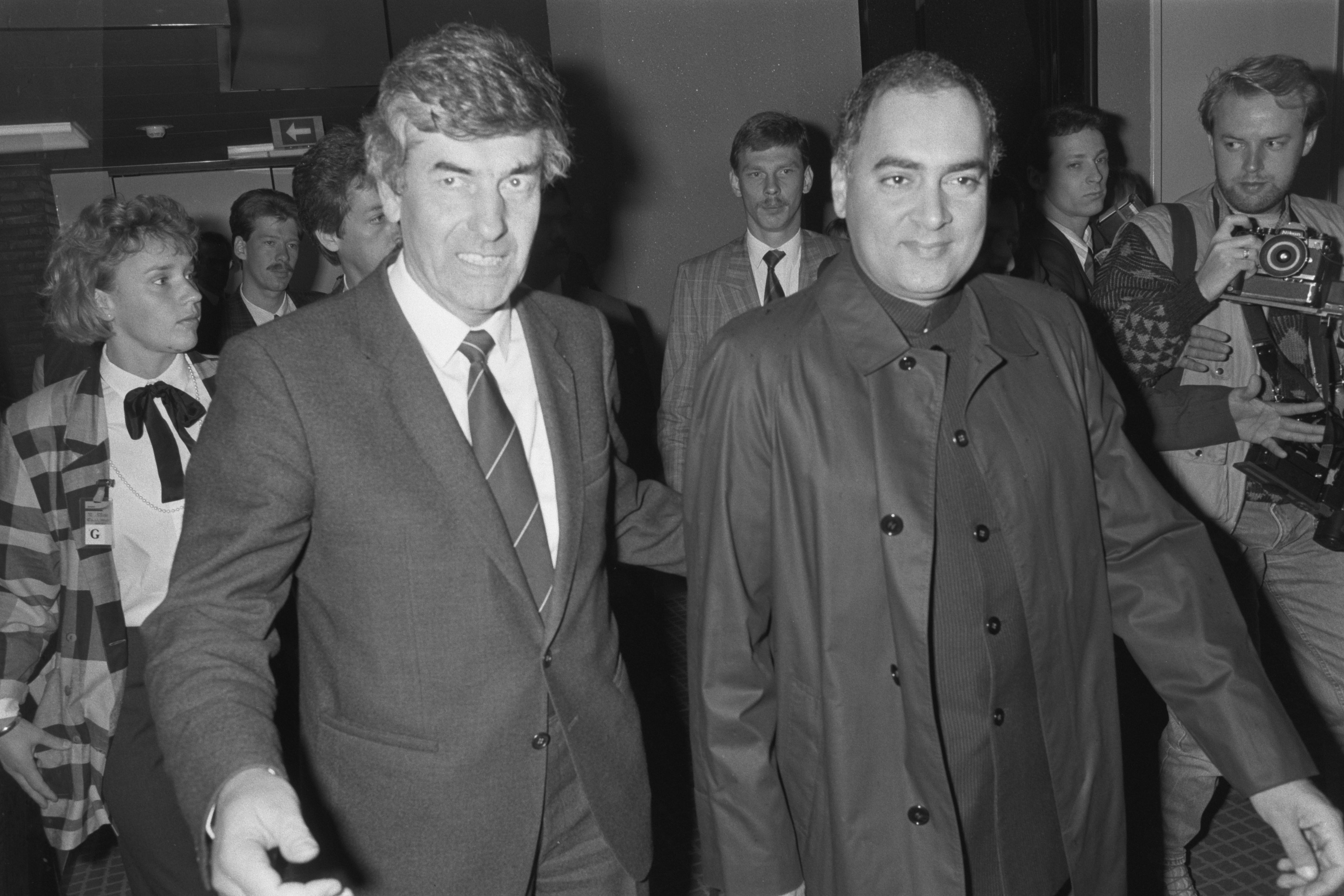
Modernization cannot be imported. It has to grow out of our own soil in order to take root. That alone is real transformation.
Indira Gandhi, 1975, Speech on the need for inexpensive medicines, February 14, 1970, in: The Years of Endeavour: Selected Speeches of Indira Gandhi August 1969-August 1972, p. 427 (quoted in Phalkey and Wang, 2016, Planning for science and technology in China and India, in: British Journal for the History of Science, p. 112)
Latest
Janak Nabar and Neha Kumari, 2025, Global S&T Leadership in Transition: Opportunities and Challenges for India (Centre for Technology, Innovation and Economic Research). “For India to fully realise her R&D and innovation ambitions, building the talent pipeline for the future will be critical. Drawing lessons from the US and China, there is a compelling need to transform and prioritise public funding of R&D. This would require well equipped policymakers to firstly identify opportunities for scientific and technological research and secondly to fund it where it is likely to be best performed, i.e. basic research in academia and technology development in industry. Increasingly funding public research within universities through competitive grants, will prepare the advanced talent that is needed by Indian industry.”
Krishna, 2025, The Indian Science Community: Historical and Sociological Studies
R Rajesh Babu and Manish Thakur (eds.), Managing India: the Idea of IIMs and its Changing Contexts
Aashique Ahmed Iqbal, 2023, The Aeroplane and the Making of Modern India
*Kumar, 2023, Science and Society in Modern India (see also his lecture posted on the ISTI Portal, dated 23 February 2022)
Vijay Kumar Sattiraju and Manthan D. Janodia, 2023, ‘Analysis of science, technology and innovation (STI) policies of India from 1958 to 2020’, in: Journal of Science and Technology Policy Management
Arokkiaraj and Irudaya Rajan, 2023, Motivations among Indian Students to Study Medicine in Eastern European Countries, in: Indian Migration Report 2023
*Jayita Sarkar, 2022, Ploughshares and Swords: India’s Nuclear Program in the Global Cold War. “It might be tempting to think that today, India’s nuclear program is no longer a collection of ploughshares and swords, but is merely more swords. That would be a mistake. The deliberate ambiguity in the nuclear program is both the source of its leaders’ freedom of action as well as the key to the anti-dissent machine that the program is. Ploughshares and swords, thus, sustain an antidemocratic culture in the largest democracy in the world in the name of freedom.” (p. 204)
Dinesh C. Sharma, 2022, Indian Innovation, Not Jugaad – 100 Ideas that Transformed India (see also an interview with the author dated 5 August 2022)
Reyes, 2022, A Technological History of Cold-War India, 1947-1969: Autarky and Foreign Aid by William A. T. Logan (review), in: Technology and Culture. “[T]ime and time again, India had almost all of the resources necessary for big development-except the money.”
Aga, 2021, Genetically Modified Democracy: Transgenic Crops in Contemporary India
Venni Krishna, 2021, ‘India @ 75: science, technology and innovation policies for development’, in: Science, Technology and Society (see also his lecture, Indian science policy 75 years after independence)
Suvobrata Sarkar, 2021, History of Science, Technology, Environment, and Medicine in India
Namdeo and Goveas, 2021, ‘Indian innovation diplomacy: choices, challenges and way ahead’, in: Science Diplomacy Review
Philipp Gieg, et al. (ed.), 2021, EU-India Relations: the Strategic Partnership in the Light of the European Union Global Strategy
Logan, 2021, A Technological History of Cold-War India, 1947-1969: Autarky and Foreign Aid
Lourens van Haaften, 2021, Higher education cooperation in the EU’s strategy towards India: shifting rationales and unfulfilled potentials, Policy Brief, Global India ETN. See also EU-India relations and the geopolitics of higher education by the same author.
Neeta Inamdar, Priya Vijaykumar Poojary and Praveen Shetty (eds.), 2021, Contours of India-EU Engagements: Multiplicity of Experiences
Dhananjay Tripathi, 2021, Evaluating Brexit Implications for India’s Relations with the EU and the UK
2010-2020
Suryesh K. Namdeo and Jenice Jean Goveas, 2020, Indian Innovation Diplomacy: Choices, Challenges and Way Ahead, in: Science Diplomacy Review
Ambreen Yousef, 2020, EU-India Summit: Vision and Mission
Sullivan de Estrada and Basrur, 2017, Rising India: Status and Power (chapter 1: strategies of status seeking in world politics: the case of India)
Tejada, 2016, Skilled Indians in Europe: Knowledge Transfer and Social Impact, in: Migration and Social Remittances in a Global Europe
Ross Bassett, 2016, The Technological Indian
Raina, 2015, Needham’s Indian Network: the Search for a Home for the History of Science in India (1950–1970)
Jairam Ramesh, 2015, Green signals: ecology, growth, and democracy in India. Author is a prominent INC politician.
Romani, 2014, Innovation in India: Combining Economic Growth with Inclusive Development
David Arnold, 2013, Nehruvian science and postcolonial India, in: Isis
Phalkey, 2013, Atomic state: big science in twentieth-century India
R.K. Shyamasundar and M.A. Pai, 2011, Homi Bhabha and the Computer Revolution
2000-2010
Cullather, 2010, The Hungry World: America’s Cold War Battle Against Poverty in Asia
Neelam Kumar, 2009, Women and Science in India: A Reader
Dinesh Sharma, 2009, The Long Revolution: the Birth and Growth of India’s IT Industry
Pawan Sikka, 2007, Rajiv Gandhi’s Modern India: Development with Science and Technology (see also Rajiv Gandhi – His Vision of India of the 21st Century: science, technology and national development, by the same author)
Ramachandra Guha, 2007, India After Gandhi: The History of the World’s Largest Democracy
Kamal Nayan Kabra and Laxmi Dass, 2006, Charkha and Chip: Rural Industrialization and Technology
Kumar, 2006, Science and the Raj: A Study of British India
20th century
Sunil Khilnani, 1999, The Idea of India
Prakash, 1999, Another Reason: Science and the Imagination of Modern India
Abraham, 1998, The Making of the Indian Atomic Bomb: Science, Secrecy and the Postcolonial State
P. Sainath, 1996, Everybody Loves a Good Drought: Stories from India’s Poorest Districts
Jasanoff, 1994, Learning from Disaster: Risk Management After Bhopal
Sumit Sarkar, 1983, Modern India, 1885-1947
*Sethi, 1988, The Great Technology Run, in: Economic and Political Weekly. “The National Technology Missions reveal a fascination with a centralized, top-down, Delhi-based approach which demonstrates a fundamental distrust of those other than the converted missionaries. Hence the preoccupation with a technology fix, a continuous affair with formats, with standardization, with quality of layout of the documents, etc.”
Sumit Sarkar, 1959, Modern India: 1885-1947
Project of History of Indian Science, Philosophy and Culture
Technology missions
| Technology mission | Years active | Verdict |
|---|---|---|
| Civic goals* | ||
| Population | ||
| “Special technology mission for population control” | ||
| Handicapped | ||
| Immunization | ||
| Health | ||
| Literacy | ||
| Sports | ||
| Rural India | ||
| Infrastructure* | ||
| Drinking water | ||
| Rural drinking water | ||
| Rural electrification | ||
| Disposal of solid waste | ||
| Housing | ||
| Rural housing | ||
| Railways | ||
| Agriculture* | ||
| Horticulture | ||
| Development in agriculture | ||
| Sugar | ||
| Sugar industry | ||
| Cotton | ||
| “Mini mission under technology mission on cotton” | ||
| Cotton production | ||
| Revamping cotton | ||
| Jute | ||
| Silk | ||
| Silk technology in Karnataka | ||
| Sericulture | ||
| Wool | ||
| Technical textiles | ||
| Textile | ||
| Pulses | ||
| Rice | ||
| Barley production | ||
| Oilseeds | ||
| Black pepper | ||
| Coconut | ||
| Promotion of mango production | ||
| Processing of fruits | ||
| Floriculture | ||
| Increasing production of spices | ||
| Aquaculture | ||
| Dairy development | ||
| Animal husbandry | ||
| Livestock | ||
| Industry* | ||
| Steel research | ||
| Biotechnology | ||
| Biotechnology in Gujarat | ||
| Nano-technology | ||
| Nano science | ||
| Information technology | ||
| Communications | ||
| Telecommunications | ||
| Silicon | ||
| Regional* | ||
| Andhra Pradesh | ||
| North Eastern Region (NER) | ||
| Other* | ||
| with IIT / for IITs | ||
| Micro, small and medium enterprises | ||
| Small scale industries |

